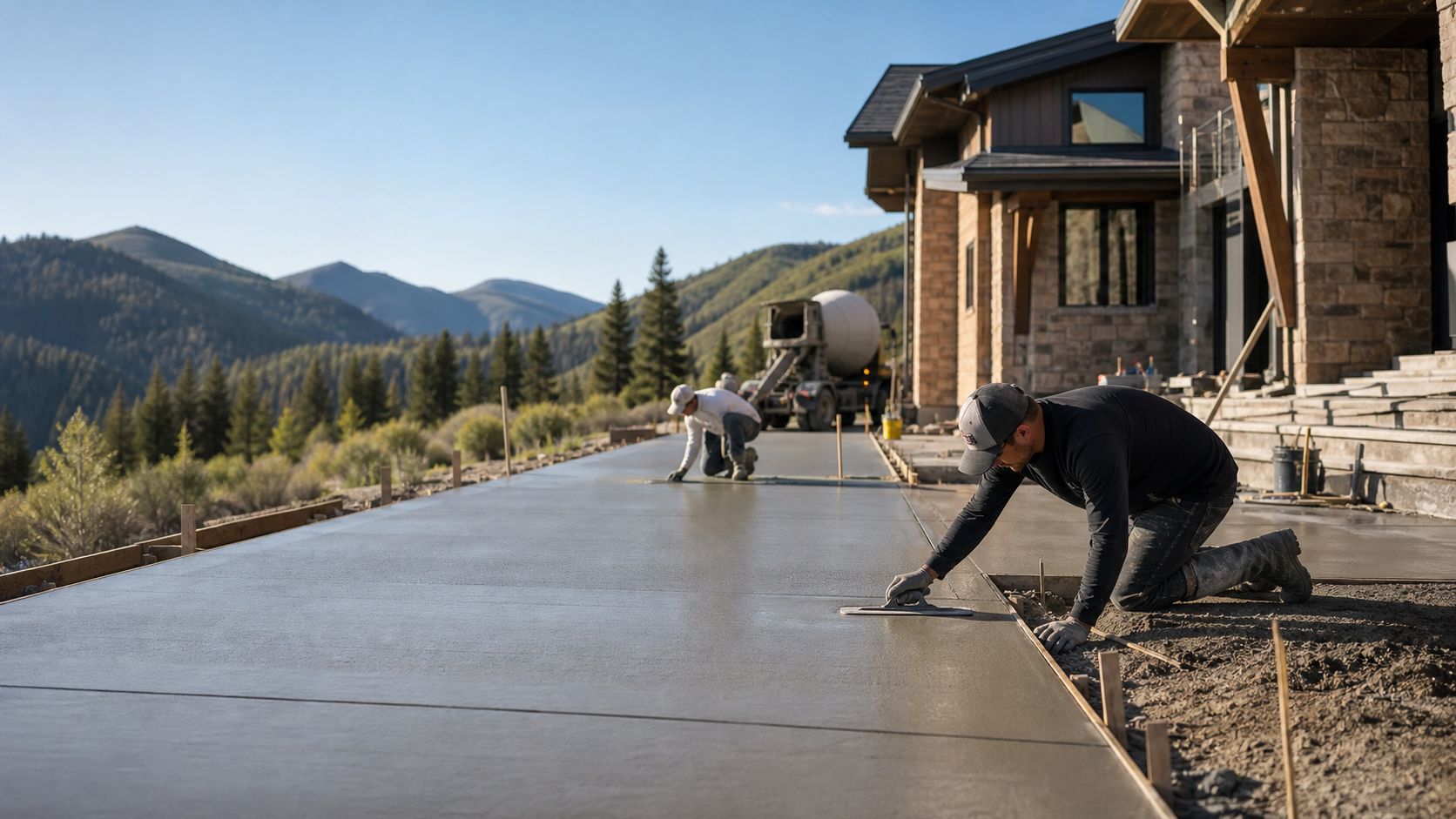
What affects the job
Concrete scope changes with demolition, forms, excavation, base prep, reinforcement, slab thickness, finish, drainage, access, pumping, weather, and whether the concrete is decorative, structural, or purely functional.
Details to gather before requesting pricing
Useful details include photos, rough measurements, site access, slope, drainage problems, existing concrete condition, finish preference, desired timeline, and whether engineering or permits may be involved.
Heber City planning notes
Mountain properties can add steep driveways, tight equipment access, retaining needs, winter curing concerns, high-end finish expectations, and schedule pressure around remodels, rentals, and second-home visits.
Patio planning details for Heber homes
Patio quotes are easier to compare when the request separates the main sitting area from attached walkways, steps, grill pads, hot tub pads, and door landings. A patio that only supports chairs and a table may be scoped differently than a slab for a hot tub, outdoor kitchen, fire feature, pergola post bases, or heavy furniture. Note the approximate square footage, shape, access route, demolition needs, and whether the work connects to an existing flatwork area or a future landscape plan.
Heber City patios need practical drainage planning because snowmelt, roof runoff, irrigation, and freeze-thaw cycles can create slick low spots or push water toward foundations and doors. Include photos of door thresholds, basement windows, downspouts, grade changes, nearby retaining edges, and where snow is usually piled. If the patio sits below a slope or beside a retaining wall, the quote should separate concrete placement from drainage correction, base prep, wall coordination, and backfill concerns.
Finish choice also affects cost and usability. Broom finish is practical for traction, while exposed aggregate, saw-cut layouts, colored concrete, or stamped concrete may fit higher-end outdoor living areas. Ask providers how the finish handles winter maintenance, deicer, patio furniture, and shaded curing conditions. For early planning, compare the patio scope against the concrete cost guide and use the contractor questions checklist to ask about base depth, reinforcement, control joints, curing, and access.
Patios built for a Heber Valley construction schedule
Patio and outdoor-living projects often follow the same busy calendar as Wasatch County's broader building boom. New homes across Heber City, Midway, and Charleston frequently add patios as a second-phase project after the primary build wraps up, and remodels compete with new construction for the same crews during the short warm-weather season. Booking a patio pour early in the season, and confirming whether landscaping, retaining-wall, or hot-tub delivery work needs to happen before or after the concrete goes in, helps avoid schedule conflicts.
Freeze-thaw, air-entrainment, and curing for patios
A patio slab sees direct snow load, shoveling, and repeated freeze-thaw cycling every winter, which makes mix design and curing practice as important as the finish. Air-entrained concrete helps exterior patios resist the surface scaling and spalling that plain concrete can develop after a few Wasatch County winters. Because Heber City sits above 5,600 feet, cooler ground and ambient temperatures slow strength gain during curing, so patios poured later in the season need extra time — and sometimes protective covering — before they are ready for furniture, planters, or hot tub loads.
Timing a patio pour
Late spring through early fall remains the most reliable patio pour window in Heber Valley. Decorative finishes such as exposed aggregate, color, or stamped concrete can be more sensitive to temperature during placement and curing, so ask providers how weather affects their decorative-finish schedule before locking in a date tied to a specific event or rental turnover.
Frequently asked questions
Can a concrete patio handle a hot tub?
Yes, but the slab needs to be designed for the load, including thickness and reinforcement sized for the filled weight of the hot tub, not just the empty unit.
Does a patio need air-entrained concrete?
Most exterior patios in Heber City benefit from air-entrained mixes because of the area's freeze-thaw cycling. Ask whether it's part of the standard exterior mix.
How long before a new patio can be used?
Concrete typically needs about a week before light foot traffic and roughly 28 days to reach full design strength; ask the provider for their specific timeline before adding furniture or heavy loads.
What finish options work best for winter?
Broom finish offers reliable traction. Decorative options like stamped or exposed-aggregate concrete can also work but should be paired with a sealer rated for freeze-thaw and deicer exposure.
Should drainage be planned before the patio is poured?
Yes. Snowmelt, roof runoff, and irrigation should be routed away from the home and any retaining walls before the patio slab is finalized.
When is the best time to schedule a patio pour?
Late spring through early fall gives the most predictable curing conditions; later pours are possible with cold-weather protection but may add cost.