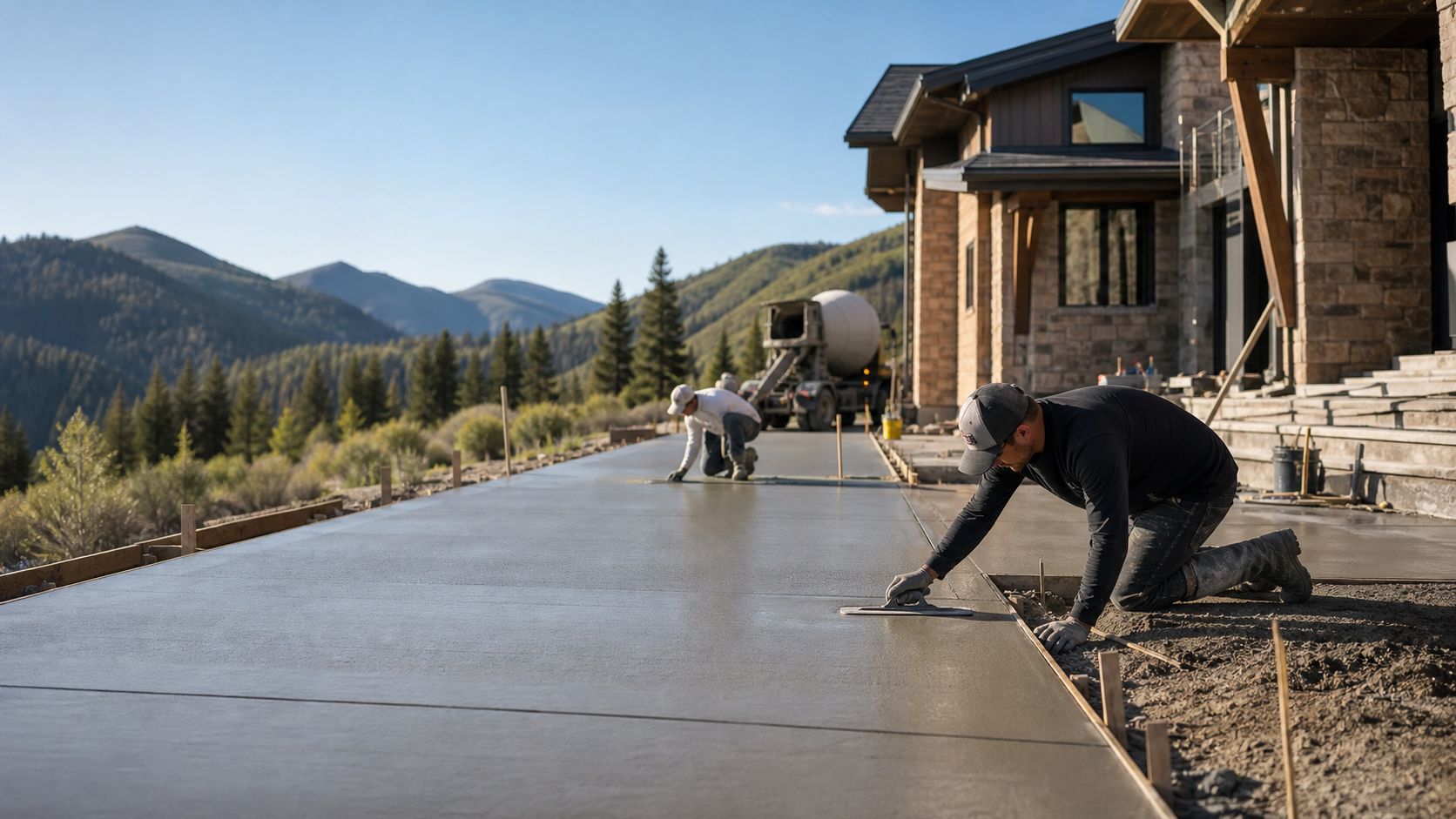
What affects the job
Concrete scope changes with demolition, forms, excavation, base prep, reinforcement, slab thickness, finish, drainage, access, pumping, weather, and whether the concrete is decorative, structural, or purely functional.
Details to gather before requesting pricing
Useful details include photos, rough measurements, site access, slope, drainage problems, existing concrete condition, finish preference, desired timeline, and whether engineering or permits may be involved.
Heber City planning notes
Mountain properties can add steep driveways, tight equipment access, retaining needs, winter curing concerns, high-end finish expectations, and schedule pressure around remodels, rentals, and second-home visits.
Flatwork planning details for Heber properties
Flatwork quotes are easier to compare when each area is separated by use: a patio may need a more finished surface and furniture layout, while a garage slab, shop pad, or equipment pad may need different thickness, control-joint spacing, edge forming, reinforcement, and access planning. Walkways, aprons, hot tub pads, steps, and utility pads should also be listed separately so a provider can price forming, base correction, finish work, and haul-off without guessing.
Heber City flatwork often has to manage snow storage, freeze-thaw movement, roof runoff, irrigation overspray, compacted road base, and transitions into existing driveways, decks, landscape walls, and entries. Photos should show slopes, downspouts, soft soil, low spots, nearby utilities, gates, retaining edges, and equipment access from the street. Those details help separate a simple broom-finish pad from work that may need drainage corrections, thicker sections, gravel import, pump access, or coordination with landscaping.
For buyer-intent planning, collect measurements for each flatwork section, describe whether the work is new placement or replacement, and note finish preferences such as broom texture, exposed aggregate, smooth interior slab finish, or decorative stamped concrete. If the project ties into a retaining wall, foundation edge, garage apron, or sidewalk, include that in the first request along with any questions from the contractor questions checklist.
Flatwork demand during Heber Valley's growth
Flatwork is often the last major concrete phase on a new-construction property, following the driveway and foundation work, which means patios, walkways, and pads on new builds across Heber City, Midway, and Charleston can end up competing for crew time with other homes finishing at the same point in the season. On existing properties, remodels and outdoor-living upgrades add to that same seasonal demand. Scoping each flatwork area separately and asking a provider for a realistic start window — rather than a fixed date — makes scheduling conversations more accurate.
Freeze-thaw and mix design for exterior flatwork
Any flatwork poured outdoors in Heber City is exposed to the same freeze-thaw cycling that affects driveways and patios. Air-entrained concrete, which includes microscopic air bubbles that absorb the expansion of freezing water, is the standard choice for exterior pads, walks, and steps in mountain climates. Because Heber City sits above 5,600 feet, curing also takes longer than in lower-elevation cities, so late-season flatwork pours may need extra protection time before they can handle foot traffic, furniture, or snow shoveling.
Seasonal pour windows for flatwork
Late spring through early fall remains the most predictable window for exterior flatwork in Wasatch County. Interior flatwork, such as a shop or garage floor tied into a heated structure, can sometimes be placed outside that window since it is not exposed to the same freeze-thaw conditions, but access, curing space, and ventilation still need to be planned with the contractor.
Sequencing flatwork with other concrete phases
Flatwork often depends on decisions made during earlier phases of a project. A patio's finished elevation may depend on a nearby retaining wall or driveway grade, and a walkway's slope depends on where a foundation wall or garage apron sits. Reviewing the full concrete scope together, rather than pricing each flatwork area in isolation, helps a contractor sequence pours correctly and avoid mismatched elevations or drainage conflicts once everything is finished.