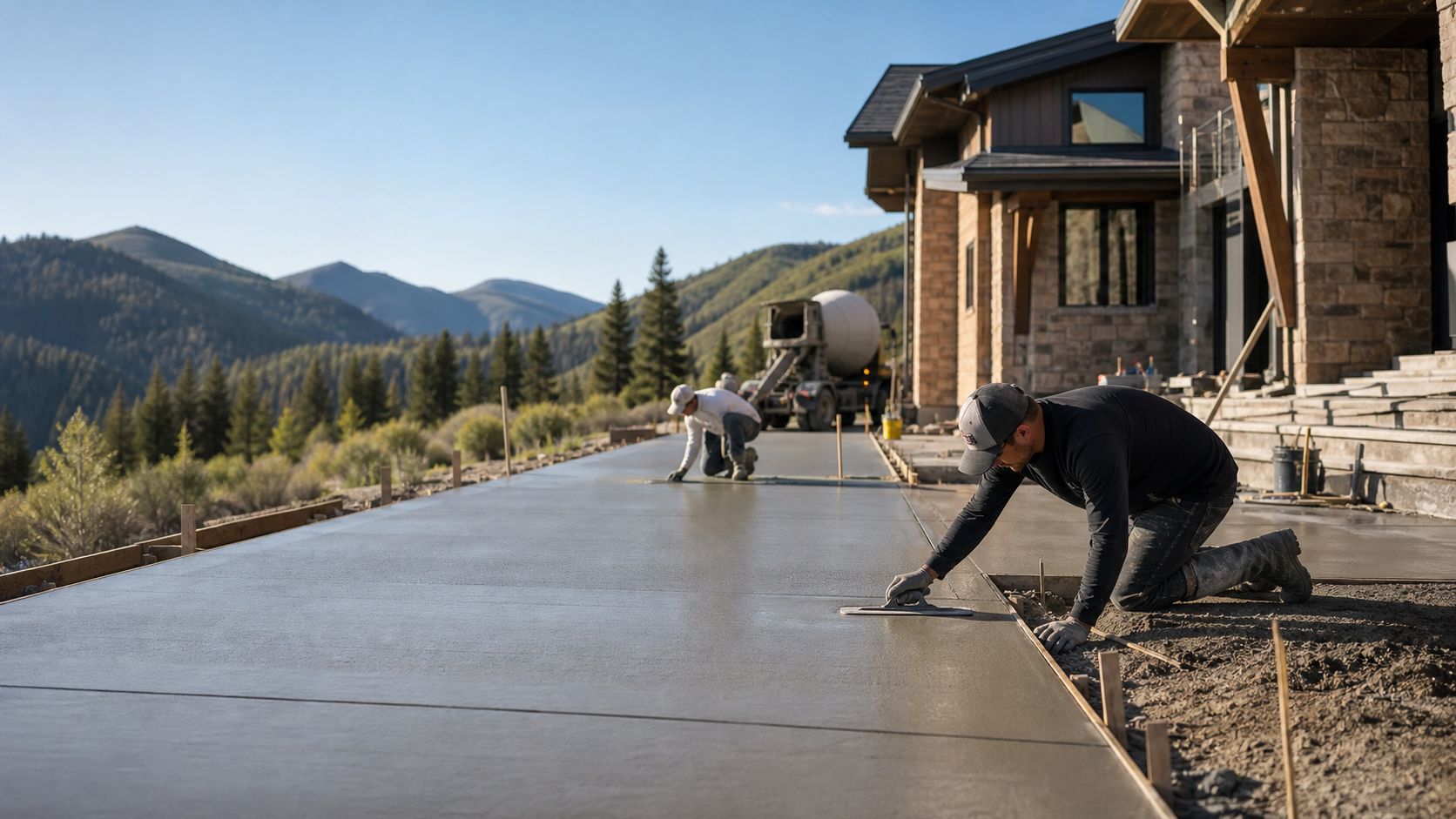
What affects the job
Concrete scope changes with demolition, forms, excavation, base prep, reinforcement, slab thickness, finish, drainage, access, pumping, weather, and whether the concrete is decorative, structural, or purely functional.
Details to gather before requesting pricing
Useful details include photos, rough measurements, site access, slope, drainage problems, existing concrete condition, finish preference, desired timeline, and whether engineering or permits may be involved.
Heber City planning notes
Mountain properties can add steep driveways, tight equipment access, retaining needs, winter curing concerns, high-end finish expectations, and schedule pressure around remodels, rentals, and second-home visits.
Sort the concrete scope before comparing bids
Before asking for contractor pricing, separate the work into the pieces that can change crew size, equipment, schedule, and risk. A new concrete driveway may need different planning than driveway replacement with tear-out, haul-off, base correction, garage-apron tie-in, and drainage repair. Slabs, patios, sidewalks, and flatwork should be described by thickness, reinforcement, finish, control-joint layout, and how water should move away from the house, garage, retaining wall, or landscaped edge.
Heber City and Wasatch County projects can also hinge on access. Note whether a truck can reach the pour, whether a pump may be needed, where forms and spoils can be staged, and whether the site has steep approaches, soft shoulders, narrow lanes, snow-storage areas, or HOA timing limits. Winter exposure matters too: freeze-thaw cycles, deicer, plow edges, tire chains, spring runoff, and shaded curing conditions can all affect the mix conversation, finish choice, and protection window.
For structural or edge-condition work, call out whether the concrete connects to a foundation wall, retaining wall, garage slab, drainage swale, or remodel schedule. If the project includes decorative finish expectations, compare those details with stamped concrete and concrete cost planning before treating two bids as equivalent. Photos, rough dimensions, slope notes, access notes, finish goals, and timeline constraints make the first quote conversation much more useful.
Finding a contractor during Wasatch County's building boom
Heber City, Midway, Daniel, and Charleston have all seen new subdivisions, custom-home construction, and remodel demand increase in recent years, and that growth has made concrete crews, ready-mix delivery, and pump trucks harder to book on short notice. New-construction driveways, garage slabs, and foundation walls often have to fit into a builder's overall schedule, while homeowner projects like patios and sidewalks compete for the same crews during the short warm-weather season. Reaching out early, with dimensions and a target timeline already organized, gives a provider a realistic chance to fit the work in.
Why mountain-climate mix design matters when comparing contractors
Heber City's elevation and winter freeze-thaw cycling change what a good concrete mix looks like compared to lower-elevation cities. Ask any contractor whether their standard exterior mix is air-entrained — meaning it includes microscopic air bubbles that let freezing water expand without cracking the surrounding concrete — because that single detail affects how long a driveway, patio, or sidewalk lasts through Wasatch County winters. Also ask how they handle curing time at elevation, since cooler ground temperatures slow strength gain, and how they plan pours during the shoulder seasons when overnight temperatures can dip below freezing even in early fall or late spring.