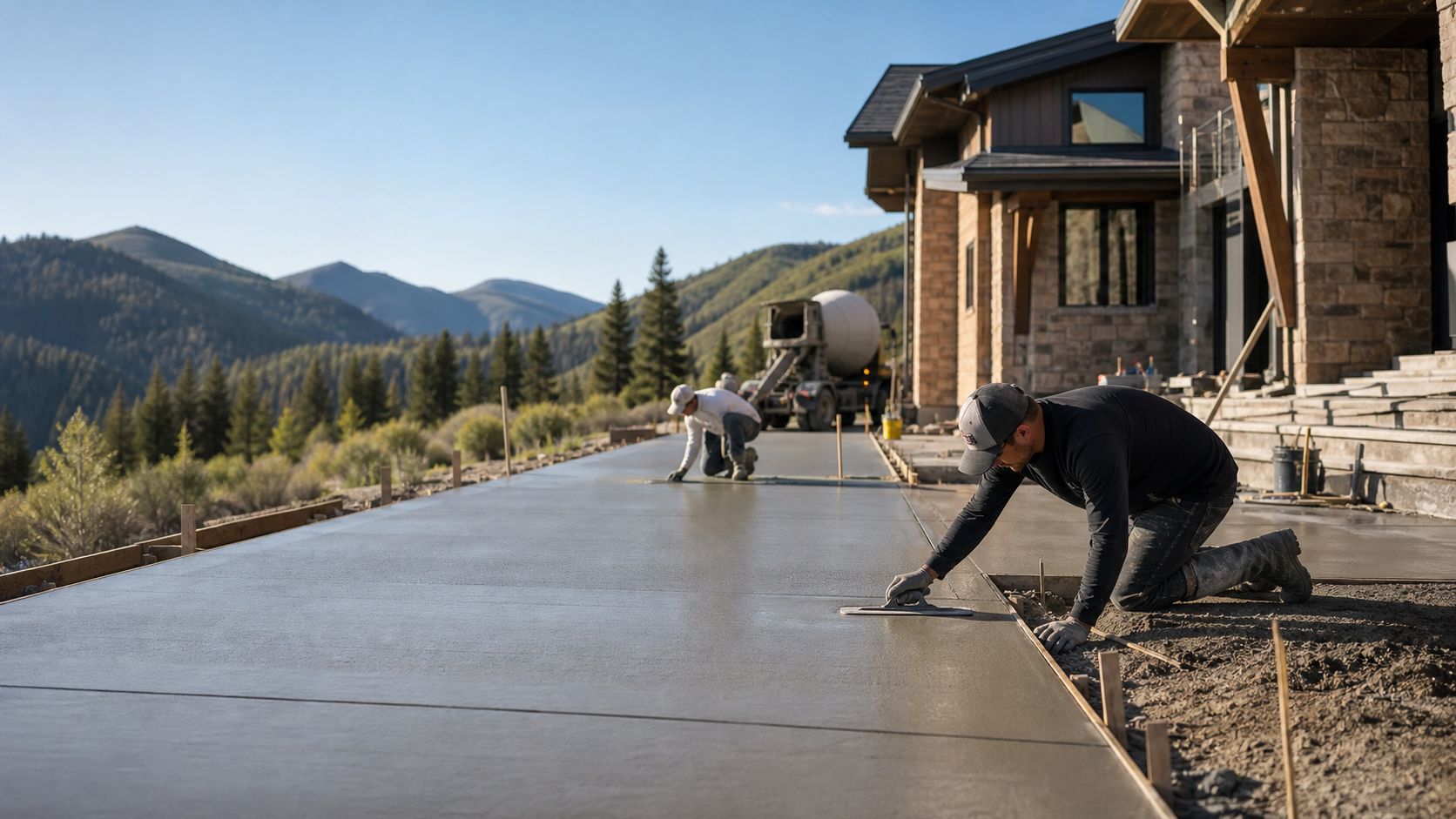
What affects the job
Concrete scope changes with demolition, forms, excavation, base prep, reinforcement, slab thickness, finish, drainage, access, pumping, weather, and whether the concrete is decorative, structural, or purely functional. On a new build, sequencing with other trades adds another layer to that scope.
Details to gather before requesting pricing
Useful details include the site plan or plat, rough measurements for each concrete phase, soil or geotechnical information if available, target dates for each phase, and whether engineering or permits are already in process. Builders should also note where utility stub-outs, sleeves, and conduit need to be protected before each pour.
Heber City planning notes
Mountain properties can add steep driveways, tight equipment access, retaining needs, winter curing concerns, high-end finish expectations, and schedule pressure around remodels, rentals, and second-home visits. New-construction lots in Wasatch County frequently combine several of these factors at once, which is why phase-by-phase planning matters more here than on a single flatwork job.
How Heber Valley's building boom is shaping new-construction scheduling
New subdivisions and custom-home lots across Heber City, Midway, Daniel, and Charleston have kept ready-mix suppliers, pump-truck operators, and finishing crews busy well beyond a typical small-market pace. On an active subdivision, multiple lots often compete for the same concrete supplier and crew pool at once, which means a foundation pour scheduled for one house can shift if a nearby lot's inspection or weather delay pushes into the same week. Builders who share a full-phase schedule with their concrete provider — not just the next pour date — tend to get more realistic commitments back.
Sequencing concrete phases on a new build
A typical new-construction sequence starts with footings and foundation walls, followed by under-slab utility rough-in, backfill, and a basement or garage slab, then driveway and exterior flatwork toward the end of the project. Each phase depends on the one before it: foundation walls need to be cured and inspected before backfill, and backfill needs to be compacted correctly before a slab is poured on top of it. Confirming inspection windows with the local building department ahead of each pour helps keep the schedule from stalling while waiting on a sign-off.
Freeze-thaw and elevation considerations for builders
Heber City's elevation and freeze-thaw climate affect new-construction concrete the same way they affect retrofit work. Air-entrained concrete is recommended for any exterior flatwork or driveway on a new build, and cold-weather placement methods may be needed for foundation or slab pours scheduled in shoulder-season months to keep a construction timeline on track. Curing takes longer at elevation, so builders should build realistic strip-form and backfill timing into their schedule rather than assuming valley-market curing speeds.
Coordinating with excavators, framers, and inspectors
New-construction concrete rarely happens in isolation. Ask a provider how they coordinate pour dates with excavation, framing, and inspection schedules, and how they handle a delay caused by another trade. Clear communication about lot access, staging area for trucks and pumps, and who is responsible for protecting completed concrete from later trades (such as material staging or equipment traffic) can prevent damage and disputes as the build progresses.