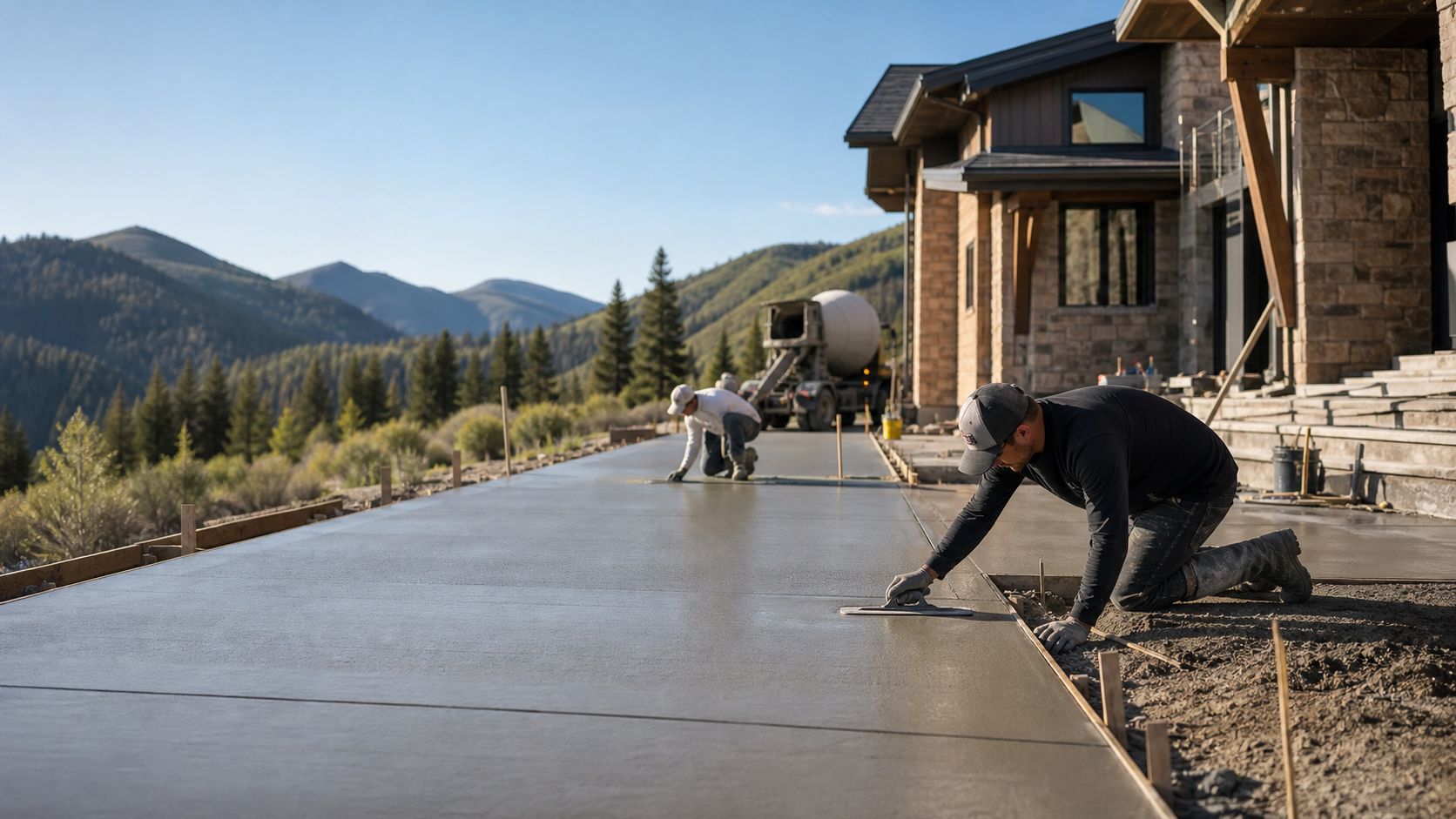
What affects the job
Concrete scope changes with demolition, forms, excavation, base prep, reinforcement, slab thickness, finish, drainage, access, pumping, weather, and whether the concrete is decorative, structural, or purely functional.
Details to gather before requesting pricing
Useful details include photos, rough measurements, site access, slope, drainage problems, existing concrete condition, finish preference, desired timeline, and whether engineering or permits may be involved.
Heber City planning notes
Mountain properties can add steep driveways, tight equipment access, retaining needs, winter curing concerns, high-end finish expectations, and schedule pressure around remodels, rentals, and second-home visits.
Sidewalk planning details for mountain lots
Sidewalk and walkway quotes are clearer when the request separates a simple replacement path from a new entry route, driveway tie-in, patio connector, step run, trash-pad access, shop walkway, or rental-unit approach. In Heber City, small paths can still need careful planning around snow storage, roof runoff, irrigation overspray, shaded ice, steep grades, retaining-wall edges, and transitions to asphalt, pavers, decks, lawns, and garage aprons.
Before comparing bids, note the approximate length and width, whether demolition and haul-off are included, the number of steps or landings, the finish texture, the intended slope, and where water should go after storms and spring snowmelt. Photos of heaved panels, trip edges, drainage cuts, soft soil, tree roots, utility boxes, sprinkler lines, and tight equipment access help separate a basic flatwork job from one that may need base correction or drainage work.
Useful quote details also include broom finish direction, control-joint layout, thickness, reinforcement expectations, compacted aggregate depth, curing protection, backfill, landscape repair, and whether the path connects to a driveway, patio, flatwork area, retaining wall, cost estimate, or contractor question checklist.
Sidewalk demand from new subdivisions
New residential developments across Heber City, Midway, and Charleston commonly include sidewalk and walkway requirements as part of subdivision plans, and those pours are often scheduled alongside driveway and flatwork phases. On existing properties, sidewalk replacement tends to be smaller in scope but still benefits from booking during the same warm-weather window that new-construction crews are using, since finishing crews are in higher demand across Wasatch County during that stretch.
Freeze-thaw and traction for winter walkways
Sidewalks and entry paths take direct foot traffic every day of the year, which makes winter traction and surface durability especially important in Heber City. Air-entrained concrete resists the surface scaling that freeze-thaw cycling and deicer salts can cause on plain concrete, and a broom finish with tight grooves provides better grip under snow and ice than a smooth trowel finish. Ask providers how they slope walkways to shed water away from doorways and how they handle transitions where shaded areas tend to hold ice longer than sun-exposed sections.
Timing a sidewalk pour
Like other exterior flatwork, sidewalks in Wasatch County are most reliably poured between late spring and early fall. A short walkway section can sometimes be scheduled in shoulder-season gaps between larger jobs, but curing protection is still recommended if overnight temperatures are close to freezing.
Sealing and long-term walkway care
A penetrating sealer applied after adequate curing can reduce moisture absorption and slow deicer-salt scaling on a Heber City sidewalk. Ask a provider how often resealing is recommended in this climate, since heavy foot traffic, shoveling, and salt exposure wear a sealer faster on a walkway than on a less-used patio or driveway apron. Keeping joints clear of debris and checking for early hairline cracking each spring can also help catch freeze-thaw damage before it spreads.
Accessibility and code considerations
Entry walkways, ramps, and steps that serve a primary residence entrance may need to account for accessibility slope limits and rise-and-run standards, particularly on remodels or new-construction projects going through city or county plan review. If a walkway connects to a public right-of-way, it may also fall under municipal sidewalk standards rather than purely private-property preference. Confirming these details with the local building office before finalizing a design can prevent a finished walkway from needing rework during inspection.