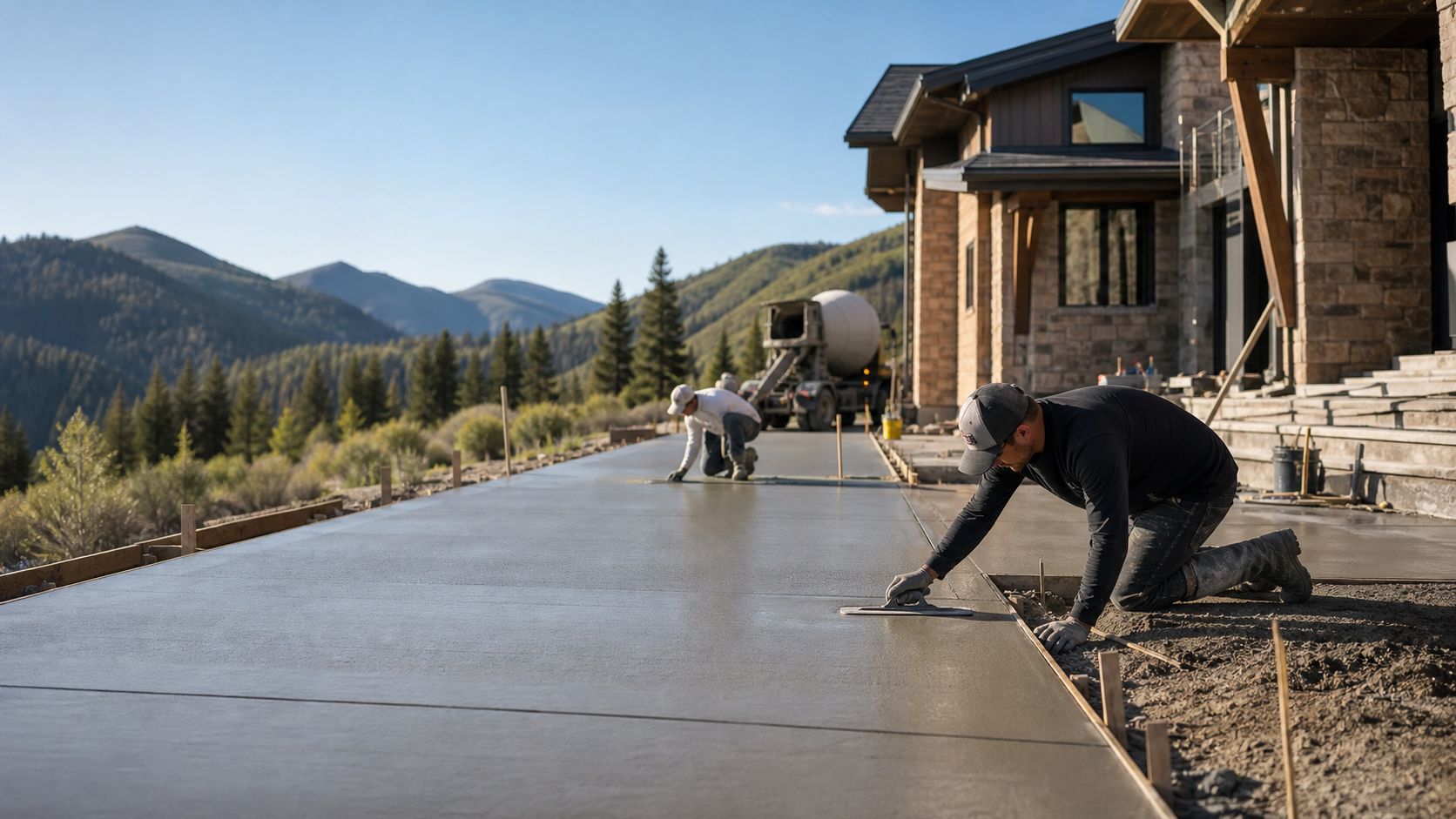
What affects the job
Concrete scope changes with demolition, forms, excavation, base prep, reinforcement, slab thickness, finish, drainage, access, pumping, weather, and whether the concrete is decorative, structural, or purely functional.
Details to gather before requesting pricing
Useful details include photos, rough measurements, site access, slope, drainage problems, existing concrete condition, finish preference, desired timeline, and whether engineering or permits may be involved.
Heber City planning notes
Mountain properties can add steep driveways, tight equipment access, retaining needs, winter curing concerns, high-end finish expectations, and schedule pressure around remodels, rentals, and second-home visits.
Why freeze-thaw is the leading cause of concrete damage here
Most of the cracking, spalling, and surface flaking seen on older Heber City concrete traces back to freeze-thaw cycling. When water gets into small surface pores or existing cracks and then freezes, it expands and pushes the concrete apart from the inside. Concrete poured without air-entrainment, or concrete that was sealed incorrectly and trapped moisture, tends to show this damage first — often as flaking or pitting on driveways, steps, and patios that see the most snow, ice, and deicer exposure. A repair plan should identify whether the original concrete was air-entrained, since a repair patch on a non-air-entrained slab may fail again within a few winters if the underlying mix issue isn't addressed.
Repair vs. replacement decision points
Surface-level spalling or hairline cracking on an otherwise stable slab is often a candidate for resurfacing or patching. Cracks that are wide, actively growing, or paired with settlement usually point to a base or drainage problem that a surface patch will not fix, meaning removal and replacement of that section is the more durable option. Mudjacking or slab-jacking can sometimes correct settlement without full replacement if the concrete itself is otherwise sound. A provider should explain which category a specific problem falls into before recommending a fix.
Timing repair work
Cosmetic and structural concrete repairs are generally easiest to schedule between spring and fall, when new concrete or patch material can cure under normal conditions. Urgent trip-hazard or safety repairs may still be handled in colder months using appropriate cold-weather materials and methods, but ask the provider how weather affects the repair's expected lifespan before committing to an off-season fix.
Documenting damage before a repair estimate
Photos taken in different light and weather can reveal details that are easy to miss in person, including hairline cracks, shallow spalling, and shading changes that suggest water is tracking under the surface. Note when the damage was first noticed, whether it has grown season over season, and whether it lines up with a downspout, sprinkler head, driveway low point, or shaded area that holds snow and ice longer than the rest of the property. That context helps a contractor separate a cosmetic issue from an early sign of a larger drainage or base problem, and it gives a clearer starting point for comparing repair estimates from more than one provider.
Preventing repeat damage after a repair
A repair is only as durable as the conditions it's placed in. If snow keeps getting piled in the same low spot, if a downspout still empties directly onto the repaired area, or if the same shaded corner keeps icing over each winter, a new patch can fail just as fast as the original concrete. Addressing the underlying drainage or snow-storage habit alongside the repair — not just the visible crack or spall — is usually what separates a fix that lasts one season from one that holds up for years.