What affects the job
Concrete scope changes with demolition, forms, excavation, base prep, reinforcement, slab thickness, finish, drainage, access, pumping, weather, and whether the concrete is decorative, structural, or purely functional.
Details to gather before requesting pricing
Useful details include photos, rough measurements, site access, slope, drainage problems, existing concrete condition, finish preference, desired timeline, and whether engineering or permits may be involved.
Heber City planning notes
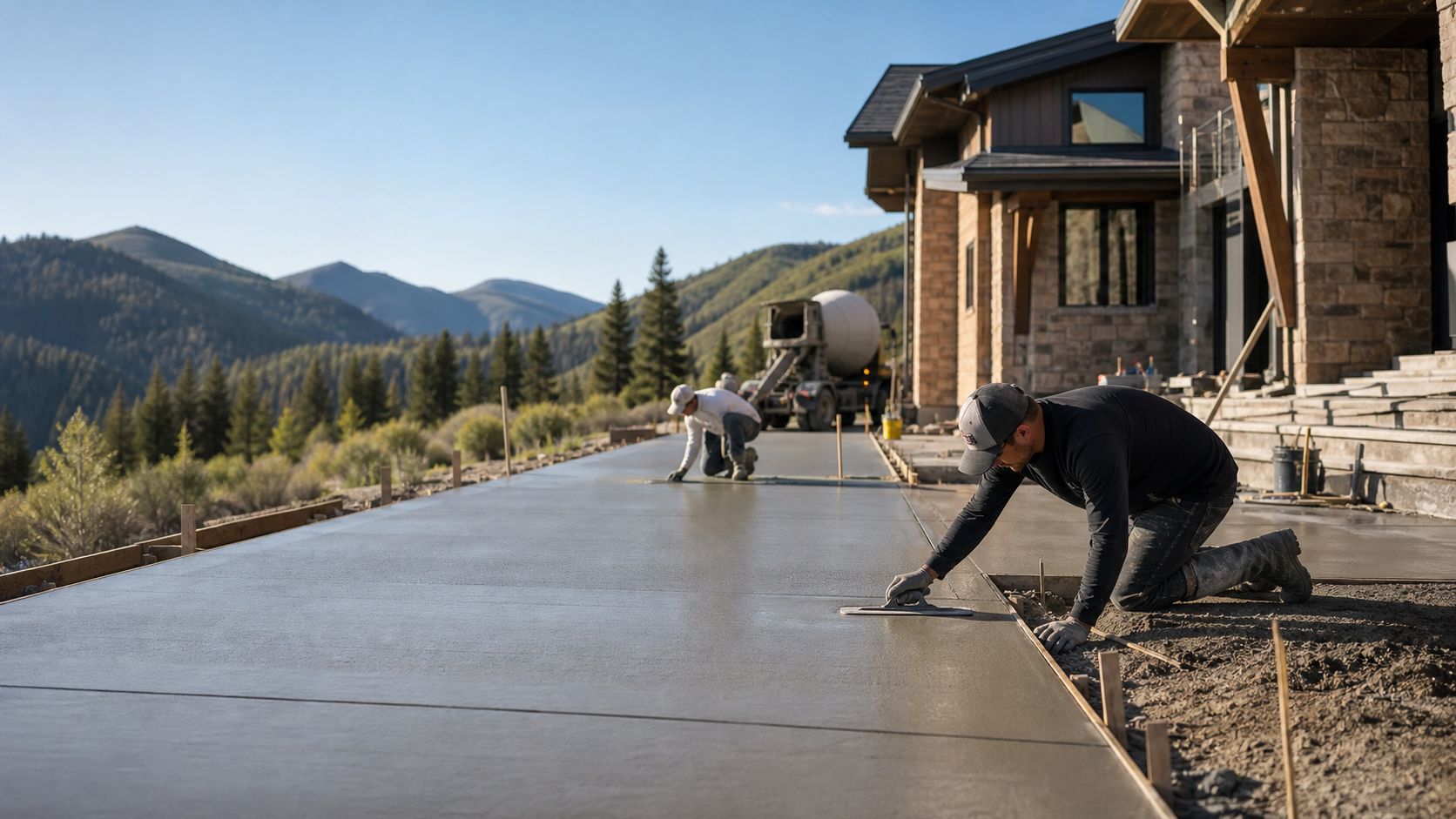
Mountain properties can add steep driveways, tight equipment access, retaining needs, winter curing concerns, high-end finish expectations, and schedule pressure around remodels, rentals, and second-home visits.
Why older Heber City driveways fail first
Freeze-thaw cycling is the most common reason a Heber City driveway needs full replacement rather than a patch. Older driveways poured without air-entrained concrete, or with a base that wasn't compacted deeply enough for local frost depth, tend to develop widespread cracking, heaving, and surface spalling over time as repeated winters work on weak points. Tree roots, poor drainage that channels snowmelt under the slab, and years of deicer-salt exposure can accelerate the same process. A replacement is a chance to correct the base, drainage, and mix design so the new driveway holds up better through the next several decades of Wasatch County winters.
What a proper replacement includes
A thorough driveway replacement typically involves saw cutting and demolition, haul-off of the old concrete, inspection and correction of the compacted base, regrading for proper drainage away from the garage and house, new forms, reinforcement appropriate for the soil and use, and an air-entrained mix suited to the local climate. Garage-apron and sidewalk transitions should be re-checked during this process, since a new driveway poured to the old grade can simply repeat old drainage problems.
Timing a replacement
Replacement projects follow the same seasonal pattern as new driveway pours: late spring through early fall gives the most reliable curing conditions. Because replacement includes demolition and base work in addition to the pour itself, it's worth building extra schedule buffer for weather delays, especially for larger driveways or steep-access sites.
Comparing driveway replacement bids
Replacement bids can vary widely depending on what is included, so it helps to ask each provider to itemize demolition and haul-off, base depth and compaction method, drainage corrections, reinforcement, concrete thickness, air-entrainment, control-joint layout, curing protection, and cleanup separately. A bid that looks lower at first glance may exclude base correction or drainage work that a competing bid includes, which can mean the cheaper option isn't actually the better long-term value once winter conditions are factored in. Ask how each provider's warranty, if any, addresses cracking or settlement in the first few years after the pour.
Working around access constraints during demolition
Demolition and haul-off are often the part of a replacement that reveals hidden constraints: narrow side-yard access, mature landscaping close to the slab edge, buried irrigation lines, or a shared driveway with a neighboring property. Walking the site with the contractor before demolition begins, and confirming how equipment will reach the driveway without damaging fences, trees, or utilities, helps avoid change orders once the old concrete is already broken out.