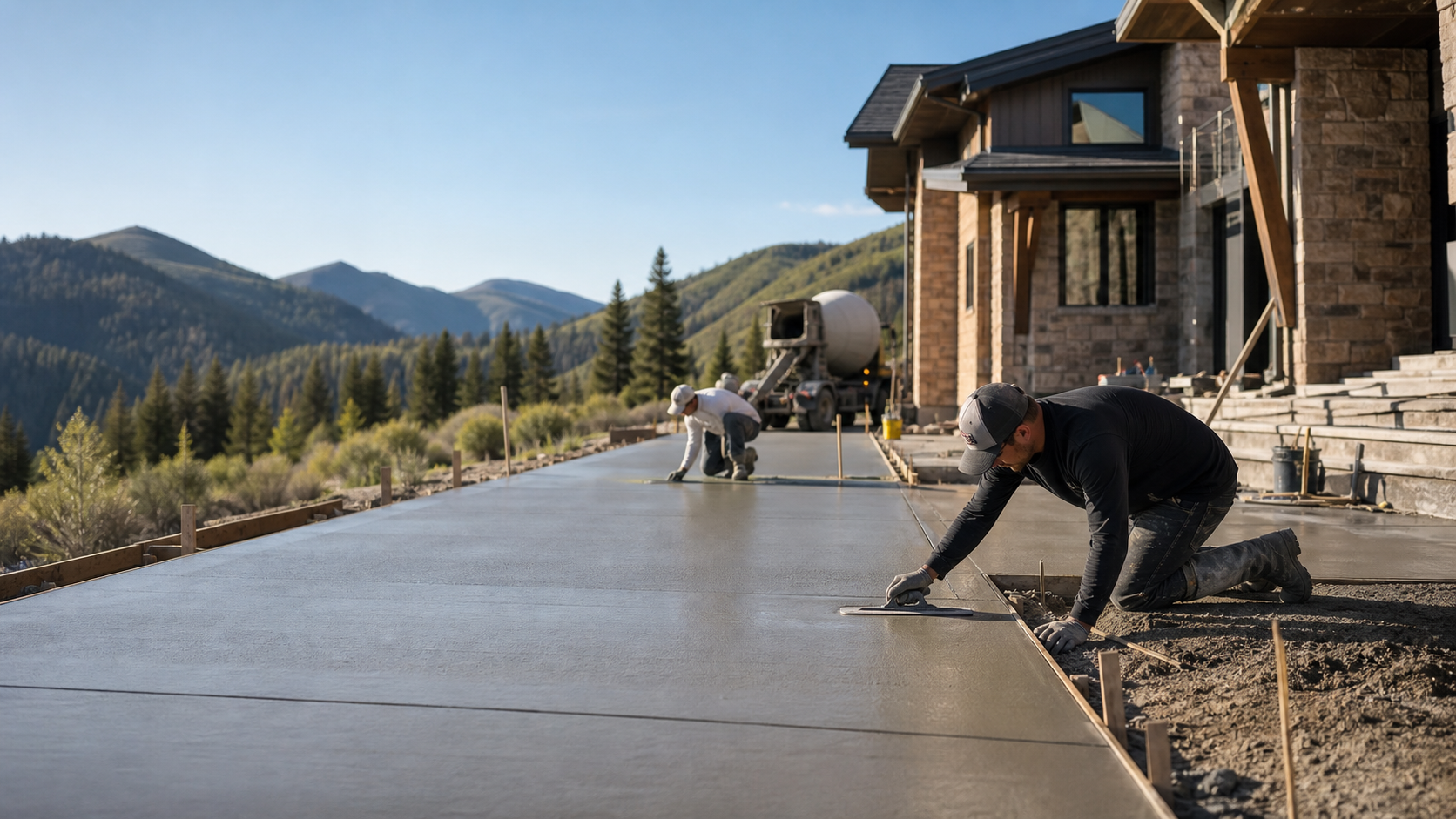
Why concrete slabs sink in Heber Valley
Concrete does not sink on its own. The soil or base under it moves. In Heber City and across Wasatch County, the usual causes are settling of poorly compacted backfill, water washing fine material out from under the slab, frost heave and thaw in the base, and downspouts or irrigation that keep one area wet. Newer subdivisions with fill soil can settle for several years after construction, and the long freeze-thaw season keeps working on any gap that forms. Once there is a void under the slab, its weight and traffic cause it to drop or crack.
How concrete leveling works
The basic idea is simple. Small holes are drilled through the slab, a material is pumped under it, and the slab is lifted gradually until it is level or matches the neighboring panel. The holes are then patched. Two materials are common: a cement-based slurry used in mudjacking, and a lightweight polyurethane foam. Each has strengths. Slurry is heavier and often less costly per cubic foot. Foam uses smaller holes, adds less weight to soft soil, and cures quickly. The better fit depends on the slab, the soil, and the provider's equipment.
What can be leveled
- Driveway sections that dip toward the garage or street.
- Sidewalk panels that have become trip hazards.
- Patios and porch slabs that slope toward the house.
- Garage floors and shop slabs that have settled in places. See garage slabs for how those are planned.
- Steps and landings that have pulled away from the building.
When replacement is the better answer
Leveling works best on slabs that are structurally sound. If the concrete is broken into many pieces, scaled all over, or reinforced steel has rusted through, lifting may not hold. Slabs that sank because the base is badly contaminated or the grade is wrong often need to be removed and rebuilt. See driveway replacement and sidewalk pages for those paths. A good provider will be willing to say when leveling is not the right choice.
Fix the water first
If the cause of the void is water, lifting the slab without fixing the source tends to be a short-term answer. Extend downspouts away from the slab, correct grading that slopes toward concrete, check sprinkler heads and lines near the edge, and look for soft ground. Many of the same measures help prevent repeat problems after a repair. Photos of the area during rain or after snowmelt are useful for a provider.
Timing leveling around Heber Valley seasons
Most exterior concrete work in Wasatch County is easiest from late spring through early fall, when the ground is not frozen and weather is more predictable. Leveling is sometimes possible in colder months, especially for trip-hazard fixes, but frozen soil, ice, and snow can limit access and affect materials. Ask the provider how winter conditions would change the plan and the expected result.
What affects the price
Quotes depend on the size of the area, how much lift is needed, the material, access for the equipment, the number of panels, and the condition of the base. A single sunken sidewalk panel is a different job from a long driveway. Leveling is often less expensive than replacing a sound slab, but only when the slab is a good candidate. The concrete cost guide covers how replacement quotes are built, so you can compare both options.
What to send for a leveling quote
Helpful details include photos of the slab from several angles, how far it has dropped, the number of panels, the age of the concrete, any cracks, and where water goes during rain. Note whether the slab is next to a foundation, a patio, or a garage door. The contractor questions page lists what to ask before choosing a provider. All concrete work arranged through this site is performed by licensed, insured local contractors matched to your project.
Frequently asked questions
How do I know if my concrete can be leveled instead of replaced?
Slabs that are mostly intact, with a stable surface and a limited drop, are usually good candidates. Slabs that are shattered, heavily scaled, or sinking because of a bigger site problem usually are not. A provider should look at the slab, the base, and the water before recommending either approach.
What is the difference between mudjacking and foam lifting?
Mudjacking pumps a cement-based slurry through small holes to lift the slab. Foam lifting injects a lightweight polyurethane material instead. Foam is lighter and uses smaller holes, while slurry is heavier and often lower in material cost. Ask each provider which they use and why.
Can concrete be leveled in cold weather in Heber City?
Sometimes. Water-based slurry is more sensitive to freezing temperatures than foam, so winter lifts depend on the material and the forecast. Describe your timing and ask how the provider handles cold-weather work.
Will a sunken slab keep sinking after it is leveled?
It can if the cause is not fixed. Water from downspouts, poor grading, or a leaking line is a common reason a base washes out again. Ask what the provider recommends for the cause, and see concrete repair for related guidance.