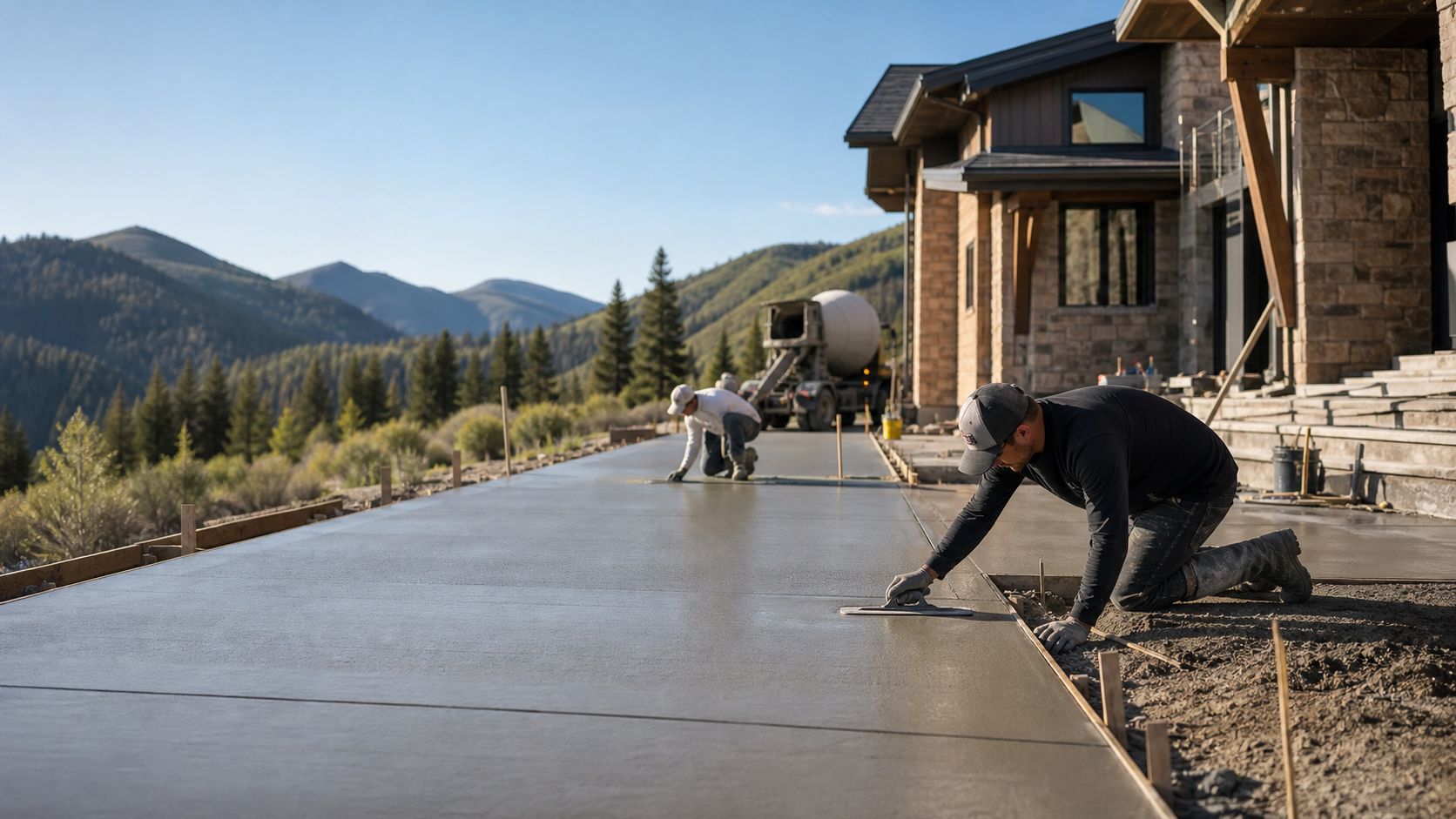
What affects the job
Concrete scope changes with demolition, forms, excavation, base prep, reinforcement, slab thickness, finish, drainage, access, pumping, weather, and whether the concrete is decorative, structural, or purely functional. A heated driveway adds tubing or cable layout, a boiler or electric control system, and insulation beneath the slab to that list.
Details to gather before requesting pricing
Useful details include photos, rough measurements, site access, slope, drainage problems, existing concrete condition, finish preference, desired timeline, and whether engineering or permits may be involved. For a snowmelt system, also note the driveway's square footage, whether the whole driveway or just wheel tracks and a walkway apron will be heated, and where mechanical space for a boiler or control panel is available.
Heber City planning notes
Mountain properties can add steep driveways, tight equipment access, retaining needs, winter curing concerns, high-end finish expectations, and schedule pressure around remodels, rentals, and second-home visits. Snowmelt systems are especially common on steep or shaded Heber Valley driveways where plowing is difficult or where a homeowner is away for stretches during ski season.
Hydronic vs. electric snowmelt systems
Hydronic systems circulate a heated water-and-glycol mixture through PEX tubing embedded in the slab, powered by a dedicated boiler, and are generally the more cost-effective choice for larger areas like a full driveway. Electric systems use resistance cable or mats and are simpler to install and control, which can make them a better fit for smaller areas such as walkways, entry steps, or a driveway apron near the garage. Full-driveway hydronic systems are the more common choice for primary Heber City residences, while electric systems are often used for targeted trouble spots on an otherwise unheated driveway.
Why elevation and freeze-thaw make snowmelt systems valuable here
Heber City's elevation and long winter season mean many driveways see dozens of snow events and repeated freeze-thaw cycles between October and April. A snowmelt system reduces the number of times deicing salt and plow blades contact the surface, which can extend the life of the concrete in addition to improving access. The concrete itself should still be air-entrained and properly cured before the system is activated, since an active snowmelt system does not replace the need for a freeze-thaw-appropriate mix design — it works alongside it.
Planning tubing layout and slab design
Snowmelt tubing or cable is typically placed above a layer of rigid insulation to direct heat upward into the driveway surface rather than down into the ground, and the concrete is often slightly thicker than a standard driveway to accommodate the embedded system. Ask providers how they plan zones — for example, heating the main driveway separately from a walkway apron — and how the system integrates with drainage, since melted snow still has to go somewhere. A boiler or electric panel needs accessible mechanical space, and the control system should have an outdoor sensor that activates the system automatically during snow events.
Timing a snowmelt driveway pour
Like other exterior concrete in Wasatch County, snowmelt driveways are most reliably poured between late spring and early fall. Because the tubing, insulation, and control wiring all have to be installed and tested before the pour, a snowmelt driveway generally needs more lead time to plan than a standard driveway, so it helps to start the conversation with a provider well before the target pour season.